
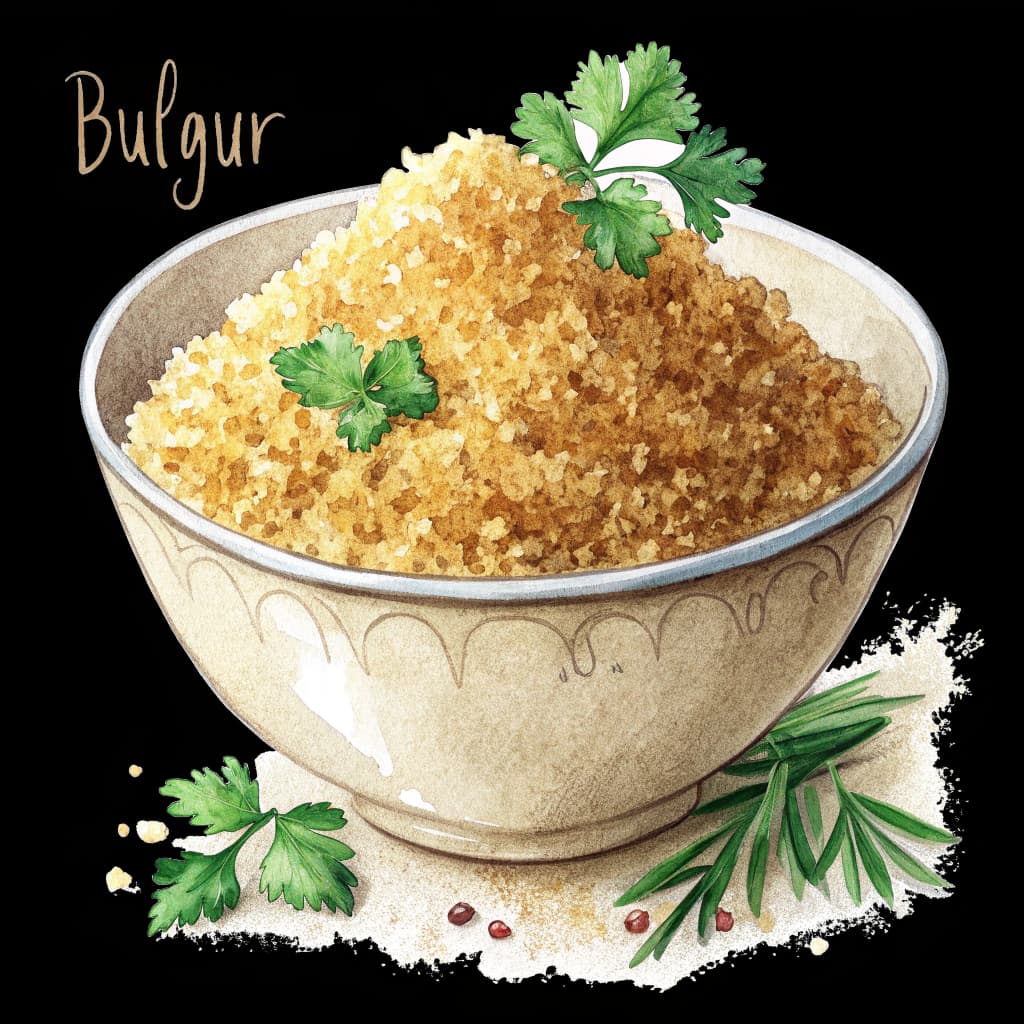
Bulgur
GrainAllergen: WheatAllergen: GlutenNuttyToastyWheatyEarthyChewyHearty
Nutrition (per 100 g)
- Calories
- 342
- Protein (g)
- 12.3
- Fat (g)
- 1.3
- Carbs (g)
- 75.9
- Fiber (g)
- 18.3
- Sodium (mg)
- 17
Values for dry bulgur; cooked portions are lighter per 100 g due to water absorption.
Storage
- Room temp: up to 365 days
- Refrigerated: up to 0 days
- Frozen: up to 0 days
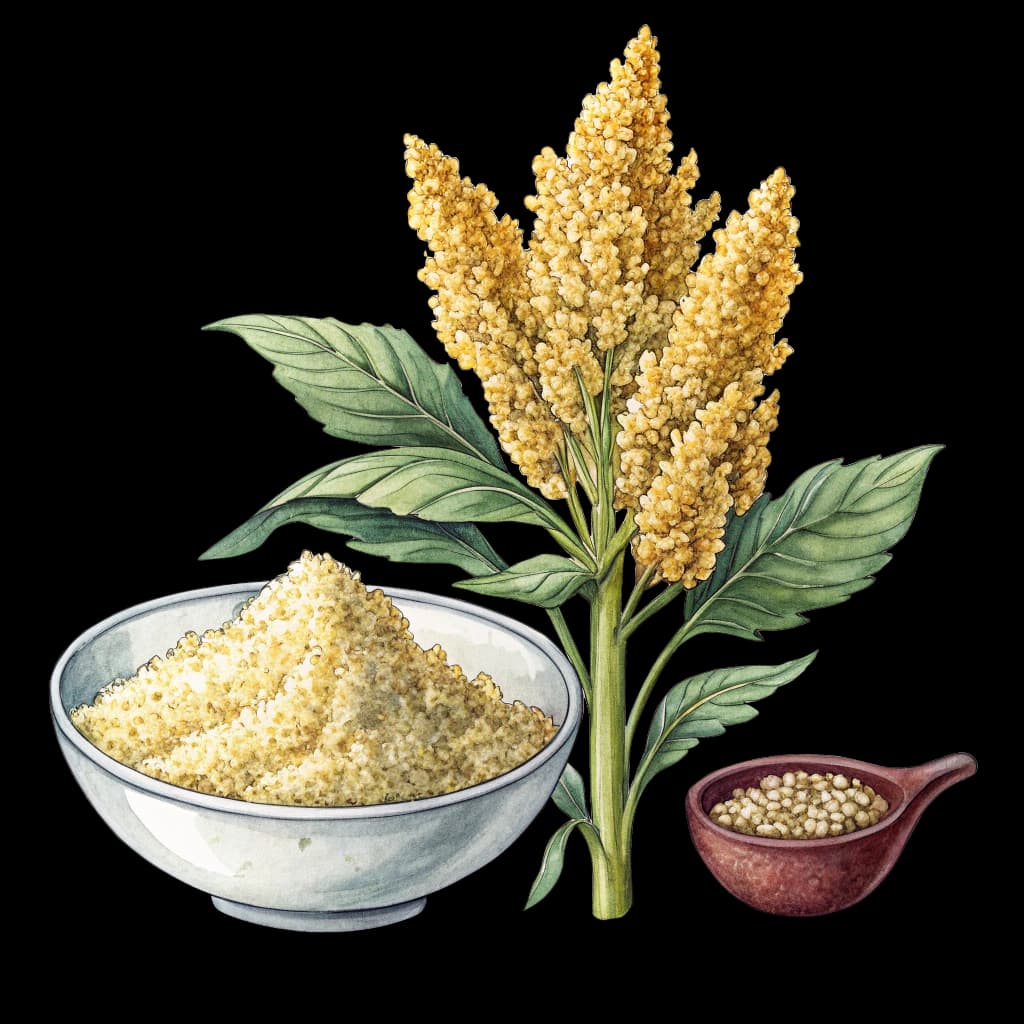
Bulgur is parboiled, cracked whole wheat with a golden-tan color and granular texture. It cooks quickly by soaking or steaming, becoming tender and fluffy with a warm, toasty aroma. Fine grades hydrate fastest while coarse grades keep a pleasant chew. Common uses include tabbouleh, pilafs, kibbeh, stuffings, and hearty salads.\n\nIt originated in the Levant and spread throughout the Eastern Mediterranean, Anatolia, and the Caucasus as a staple grain preparation. Traditional processing involves parboiling wheat, drying, and cracking into graded sizes used across Middle Eastern cuisines.

&w=3840&q=75)

&w=3840&q=75)
Recipes with Bulgur
Search on
1 result
